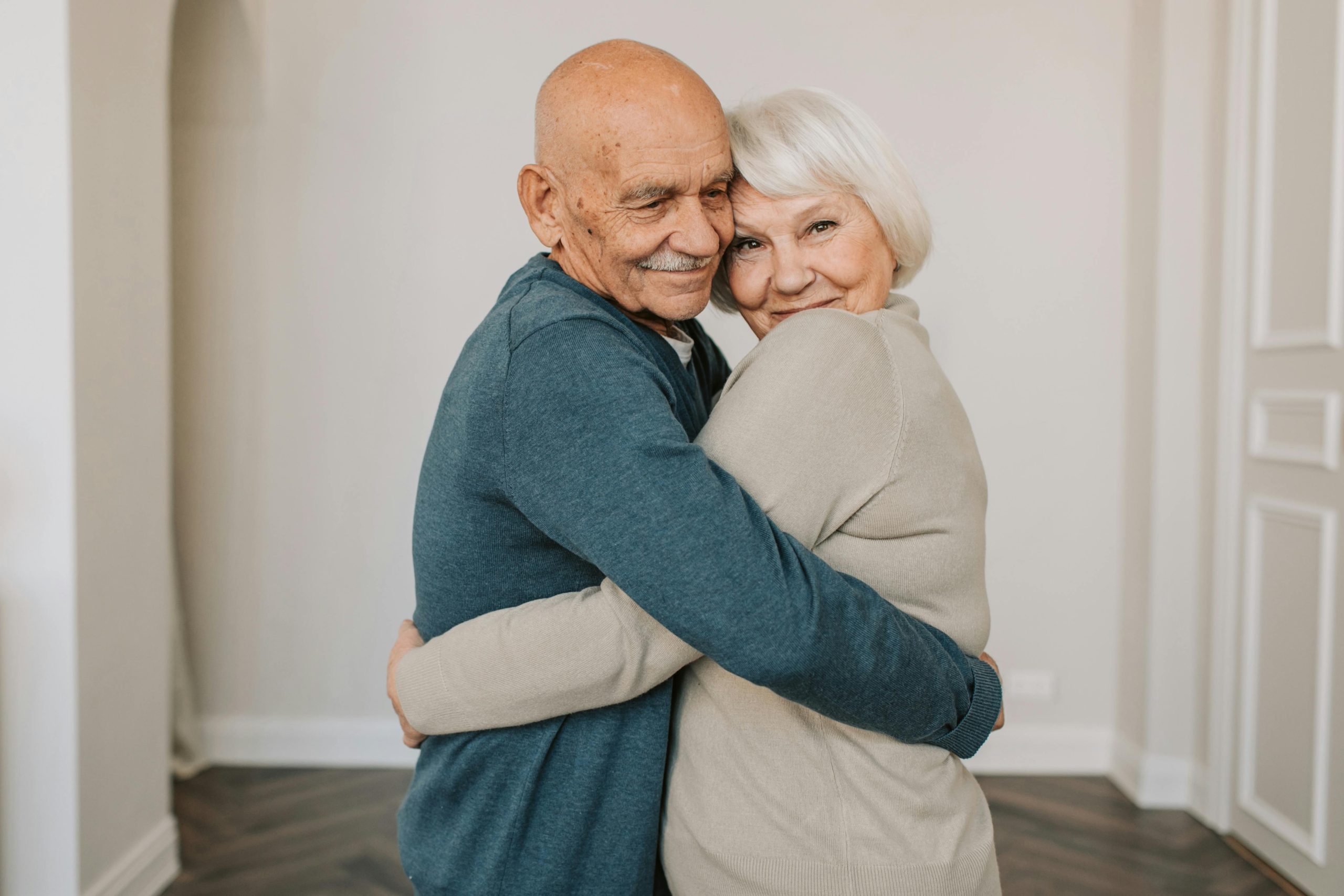

Dating after 50 can be fun.
You may know yourself better. You probably have a much clearer idea of what you want in a relationship and, perhaps more importantly, what you absolutely don’t want.
You may feel more confident, have better boundaries and be considerably less willing to spend three hours pretending to be fascinated by somebody you have no intention of seeing again.
But dating after 50 can also leave you wondering:
When did it get this complicated?
Particularly if the last time you were single, meeting someone involved a pub, a party, work, friends – or occasionally catching someone’s eye across a room and hoping they’d eventually come over.
Now there are apps.
Swiping.
Ghosting.
Situationships.
People you’ve never met sending you photographs that you definitely didn’t request (yes, I am talking about dick pics); and an apparently complicated etiquette surrounding how long you should wait before replying to a message.
Welcome back to dating.
So, how exactly are people meeting after 50?
The obvious answer is dating apps, but they’re certainly not the only way.
People meet through friends, work, hobbies, walking groups, holidays, gyms, social events and increasingly through online communities and social media.
And sometimes people reconnect with somebody they knew 20 or 30 years ago.
There is something rather wonderful about discovering that the person you vaguely remember from 1993 has reappeared, although social media does mean you can now conduct a fairly comprehensive investigation before agreeing to have coffee with them.
Dating apps, however, have undoubtedly changed the landscape.
For somebody who hasn’t dated for decades, they can initially feel like being dropped into a world in which everyone else has been given the instructions.
They haven’t.
Most people are making it up as they go along too.
Dating apps: a little adjustment may be required
There are apps aimed specifically at people over 50, alongside the mainstream platforms used across different age groups.
They can introduce you to people you would simply never encounter in everyday life, particularly if your social circle is established and doesn’t routinely provide a stream of eligible strangers.
But apps also create some unusual dynamics.
You can know someone’s height, occupation, star sign, exercise habits and feelings about dogs before you’ve heard the sound of their voice.
You may spend two weeks messaging somebody only to discover within approximately 90 seconds of meeting that there is absolutely no chemistry whatsoever.
Or you may almost dismiss someone from a profile and then discover they’re completely different in person.
A profile is useful.
It isn’t a person.
If you are interested, it can be better to move towards a phone call, video call or meeting rather than building an entire relationship through messaging.
Because there’s another potential problem with prolonged messaging: we fill in the gaps.
Before long, the person you’re getting to know can become partly who they actually are and partly who you’ve imagined them to be.
Reality then has rather a lot to live up to.
What are you actually looking for?
This sounds obvious, but it isn’t always.
Dating after 50 can happen following divorce, separation or bereavement. Some people have been single for years. Others have only recently left a relationship.
Some want another long-term partnership.
Some absolutely do not.
Some want companionship but not cohabitation.
Some want sex without a conventional relationship.
Some want a relationship but have no intention of ever sharing a bathroom again.
And some genuinely don’t know yet.
All of those positions are legitimate.
One advantage of dating later in life is recognising that a successful relationship doesn’t necessarily have to follow the traditional trajectory of:
meet → relationship → move in → marriage → merge absolutely everything you own.
You are allowed to decide what works for you.
Then there’s the first date
First dates are strange at any age.
At 50+, however, you potentially arrive with several decades of life behind you.
There may be children. Ex-partners. Ageing parents. Careers. Mortgages. Established friendships. Health issues. Financial responsibilities.
And two homes containing approximately twice as much furniture as any future shared home could possibly accommodate.
You are not simply discovering whether somebody likes Italian food.
You’re gradually discovering whether two already-established lives might fit together.
That doesn’t mean the first date needs to become an interview.
You probably don’t need to establish their pension arrangements before the starters arrive.
You’re simply finding out:
Do I enjoy being with this person?
Not:
Could I spend the next 30 years with them?
That’s quite a lot of pressure to put on one coffee.
And eventually… sex
This is often where dating after 50 becomes particularly interesting.
Having sex with somebody new after years, perhaps decades with the same person can feel exciting.
It can also feel terrifying.
You may suddenly become acutely aware that your body isn’t the body you had the last time you were dating.
But neither is theirs.
Bodies age.
That isn’t a sexual failing.
Menopause can affect lubrication, comfort, arousal and desire. Erections can become less immediate or predictable. Some people notice changes in orgasm or ejaculation. Medication, physical health, hormones, stress, sleep and alcohol can all affect sexual response.
And then there is anxiety.
Will I get an erection?
Will sex hurt?
What will they think of my body?
What if I can’t orgasm?
What if they expect something I don’t want?
What if it’s just… awkward?
These thoughts are extremely effective at taking somebody out of an erotic experience and putting them firmly inside their own head.
As a psychosexual therapist, this is something I see repeatedly: the more we monitor whether our body is responding “properly”, the harder it can become to respond sexually.
Sex starts to feel like a performance.
And performance is very different from pleasure.
Sex at 55 doesn’t need to behave like sex at 25
This is an important one.
Sometimes people interpret a change in sexual response as evidence that something is wrong.
But sexual response changes throughout life.
You might need more stimulation than you once did.
More time.
Lubricant.
Different kinds of touch.
A different sexual position.
Medication or medical treatment where appropriate.
Or simply less emphasis on penetration and orgasm being the measures by which successful sex is judged.
The aim doesn’t have to be recreating the sex you had when you were younger.
It can be discovering what good sex looks like now.
And there can be advantages to getting older.
Many people know their bodies better. They understand what they enjoy. They’re more comfortable communicating. They’re less concerned about doing what they think they are supposed to do.
There is something to be said for reaching an age where pretending something feels fantastic when it doesn’t has finally lost its appeal.
When do you have sex?
Whenever you both want to.
There isn’t a correct number of dates.
Sex on a first date doesn’t determine whether a relationship will become serious.
Waiting doesn’t guarantee that it will.
And nobody earns access to your body because they’ve bought dinner.
What matters is mutual consent, feeling comfortable and being able to communicate about what you do and don’t want.
That includes changing your mind.
Dating later in life doesn’t mean you should somehow be beyond feeling nervous about these conversations.
Sometimes the opposite is true.
If you’ve been with one person for many years, discussing sex with somebody completely new can feel remarkably exposing.
We also need to talk about condoms
For some people dating after 50, contraception is no longer relevant.
Protection from sexually transmitted infections still is.
This is easily overlooked.
People starting new relationships later in life may not have thought about condoms or STI testing for decades. Asking a new partner about sexual health can feel awkward, particularly if you grew up at a time when conversations about sex were considerably less open.
But being 50, 60 or 70 doesn’t provide immunity from an STI.
Talking about testing and protection isn’t an accusation.
It’s part of looking after your sexual health.
And yes, condoms can sometimes introduce another issue: some men find that stopping to put one on contributes to losing an erection.
That can quickly create a vicious cycle:
worry about losing erection → monitor erection → erection reduces → more worry next time.
Again, this is something that can be worked with rather than accepted as evidence that sex is no longer going to work.
What about body confidence?
Being naked with somebody new can feel vulnerable at any age.
After 50, your body carries more evidence that you’ve actually lived in it.
Scars.
Stretch marks.
Changes in weight.
Breasts, stomachs and genitals that don’t necessarily look the way they did decades ago.
It is remarkably easy to assume the other person is examining all of this with the same critical eye you use on yourself.
They’re probably not.
In fact, there’s a reasonable chance they’re lying beside you worrying about precisely the same thing.
Good sex requires enough attention to be directed towards what you’re experiencing, rather than towards an imaginary view of yourself from the other side of the bed.
Don’t ignore the red flags just because dating is difficult
There can sometimes be a temptation later in life to think:
Maybe I need to be less fussy.
There is a difference between being open-minded and overriding your instincts.
Pay attention to how somebody treats you.
Do they respect boundaries?
Are they consistent?
Can they tolerate you saying no?
Do their actions match what they tell you?
Can you disagree without being punished for it?
Can you talk about sex?
Do you actually like who you are when you’re around them?
Having standards isn’t the same as expecting perfection.
And being over 50 doesn’t mean you should be grateful simply because somebody is interested.
You are also allowed to stop dating
This perhaps doesn’t get said enough.
Dating isn’t compulsory.
You can delete the apps.
Take a break.
Decide you’d rather spend Saturday evening with friends.
Decide you enjoy being single.
Or decide that after six months away from dating, you’d quite like to have another go.
There isn’t a prize for finding a partner fastest.
And a relationship isn’t evidence that you’ve succeeded at life.
Dating after 50 really can be good
Yes, the landscape has changed.
There may be apps to navigate, new terminology to decipher and the occasional moment when you genuinely wonder whether human beings have forgotten how to communicate.
Your body may have changed too.
So might your expectations of sex and relationships.
But you also bring something to dating that your younger self didn’t have – experience.
You know more about relationships.
You know more about yourself.
Hopefully, you know more about what you need.
And you’re probably much better at recognising what you don’t.
Perhaps that’s the real advantage of dating after 50.
You’re not trying to become the person somebody else wants.
You’re finding out whether you actually like the person sitting opposite you.
And if you do eventually end up in bed together?
Hopefully you’re a little less concerned about what sex is supposed to look like too.
Good relationships don’t have an age limit.
Neither does good sex.
Emma Mathews is a psychotherapist and psychosexual and relationship therapist offering therapy in Wirral and online across the UK. Psychosexual therapy can help with sexual difficulties including erectile difficulties, performance anxiety, painful sex, low desire, difficulties with arousal and orgasm, and changes to sex and intimacy in mid and later life.